
When we first started planning our coast to coast USA trip, we were initially focused around the major cities and didn’t give too much thought to some of the natural wonders that the USA had to offer.
After chatting to a friend of mine that lives stateside, we were urged to reconsider and drop some of our planned stops in favour of hitting some national parks. We revisited our route and managed to carve out a 2 week stretch in the middle of our trip that went through 7 different national parks as well as some other amazing spectacles like Monument Valley, Antelope Canyon and Lake Tahoe. Looking back on our trip, we’re so glad that we made this change to the original plan as the days spent exploring these amazing landscapes were some of the best of our entire 4 month trip.
This two week national parks road trip takes you from Denver, Colorado through Utah, Arizona, Nevada and California, finishing at Lake Tahoe – covering five states of America’s most spectacular scenery.
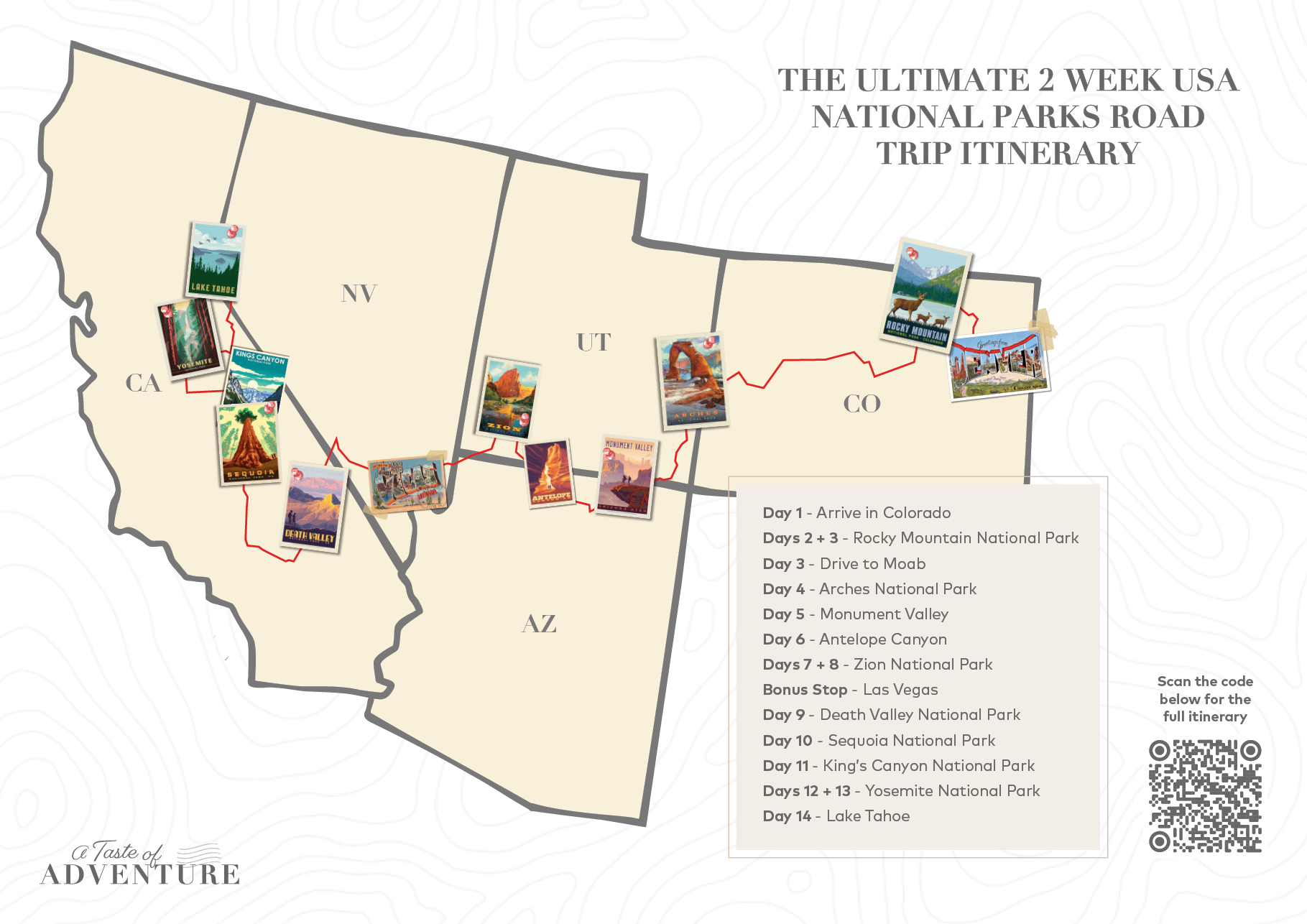
Your 2 Week National Parks Road Trip Map & Complete Route
Our detailed 2 week national parks road trip map shows the complete route with all stops, driving distances, and recommended overnight locations. This carefully planned itinerary minimizes backtracking while maximizing your time exploring America’s natural wonders.
Perfect for Flexible Planning: Whether you’re starting from Denver or working backwards from California, this national parks road trip works beautifully in either direction. If you’re coming from San Francisco or Los Angeles, simply follow this itinerary in reverse. The route is also designed so you can join or leave at any point – perfect if you’re shorter on time and want to experience just some of these incredible destinations.
Download Your Complete Road Trip Map
Essential Planning Tips:
- America the Beautiful Pass: Grab this $80 annual pass (as of August 2025) for access to all national parks – it pays for itself after just 3 park visits
- Book accommodations early: Popular parks fill up months in advance, especially during peak season
- One-way trip: This is a point-to-point journey, so factor in return travel time if you need to get back to your starting location
Some of the sections in this guide contain affiliate links which, at no extra cost to you, provide us with a small commission. We only recommend places we’ve visited personally and all opinions expressed here are our own.
USA National Park Road Trip Itinerary
In This Guide

Day 1 – Arrive in Colorado
Since an early start is usually best when visiting any national park, we recommend getting to your accommodation the day before you first day of exploring. This makes sure you can be up bright and early and ready to head into the park first thing in the morning to beat the crowds and secure a parking spot.
When we started this leg of our journey, we flew from Dallas-Fort Worth into Denver which is about 60 miles from Rocky Mountain National park. In Denver, we picked up our hire car then proceeded on a mad dash around the city, picking up essentials for the next couple of weeks like hiking boots and spikes as well as snacks and drinks. Once we were done shopping, we hit the road towards the park.
When visiting Rocky Mountain National Park, there are 2 major choices of towns to stay in or near, Estes Park on the east side of the park or Grand Lake on the west side. Estes Park is the more popular choice due to the greater abundance of shops and restaurants for visitors whereas Grand Lake offers a more relaxed and peaceful option. As we were driving in from Denver to the east of the park and most of the things we wanted to do inside the park were easiest to access from the Beaver Meadows entrance on the eastern side, we opted to stay in Estes Park.
We had a great time staying at the 4 Seasons Inn on Fall River and can’t recommend it enough as a base for your adventures into Rocky Mountain National Park. The lodge is super cute, regularly receives visits from wild deer and turkeys and there’s even a hot tub available on site for all guests. Mark was a great host and provided us with freshly baked cookies but if you’re still looking to satisfy your sweet tooth, make sure to head up the road to Cinammon’s Bakery for some of the best cinnamon rolls you’ll ever eat!
If the 4 Seasons Inn is fully booked or you’d like to consider some other options in the area, you can check out a full list of places to stay here.


Days 2 & 3 – Rocky Mountain National Park
As parking can be very limited throughout the USA’s national parks and crowds can be a real problem in the peak season, we’d recommend getting as early a start as possible when heading into Rocky Mountain National Park. When we visited in October 2022 there was a timed entry system in effect to manage traffic into the park which is also in effect for the 2023 season. You can get up to date info the on the timed entry permit system here. We grabbed a permit for 6am entry to ensure we beat the crowds and could maximise our time in the park.
There are so many great things to do and see within the park that you could spend the whole 2 weeks here. As we were short on time, we tried to cram as much as we could into 2 days. If you want a detailed breakdown of what we got up to you can check out our 2 day itinerary for Rocky Mountain National Park.
If you’re looking to fill your time in and around Estes Park in the evenings once you’ve finished exploring, why not check out the Stanley Hotel which was the inspiration for Stephen King’s horror classic “The Shining”.

Day 4 – Drive to Moab, Utah
We’re not going to sugar coat this, this is a very long day consisting of nearly 400 miles of driving. However, driving through this particular part of the US is so jaw-droppingly spectacular that this day mostly flew by.
We’d recommend hitting the road early and heading south out of Estes Park towards Idaho Springs. This section of the drive sees you meandering through vast stretches of gorgeous forest set against the backdrop of the rockies. We stopped off at Tahosa Coffee House about 20 minutes outside of Estes Park to fuel up for the long day.
The vast majority of the drive takes you past some of Colorado’s beautiful mountains and canyons along I-70 before crossing over into Utah for the final stretch. We’d recommend a pit stop in the picture postcard ski resort town of Vail which looks as though it’s belongs somewhere in the Swiss alps. Grab a bite to eat and take a quick look around the stores before getting back on the road heading west.
We stopped off at a Costco in Eagle about 30 mins from Vail to grab some petrol to see us through the last leg of the journey. Top tip for non-US Costco card holders, your card is valid in the USA and will give you access to some of the cheapest fuel in the country. You’ll just need to speak to an attendant to verify your card first before the pump will activate for you. We also had trouble with our regular travel cards here and had to resort to a Visa card for my UK current account. This resulted in small foreign exchange fees so watch out for that and come prepared.
The last few hours as you cross from Colorado into Utah will see the mountains transform into striking red cliffs and the final leg from I-70 down to Moab along route 191 treated us to some of the most amazing landscapes we’ve ever seen. The sun was setting as we rolled through a desolate wilderness and, being from the UK, it was mind-boggling just how vast this country is and how empty and unspoiled certain regions are.


Days 5 & 6 – Arches National Park
Once again, we’d recommend getting out the door early to gain access to the park before the majority of the crowds arrive. Arches is probably the most manageable of the parks in this list and you can see the majority of it’s highlights in just one day.
There are some great hikes in the park ranging from short, flat loops to slightly terrifying climbs up rock faces and tiptoeing along precarious ledges. Depending on the time of year you visit, it can be pretty hot so make sure you’re well stocked with water.
We were all done with seeing most of the main sites by late afternoon on our first day so headed back to our accommodation to grab a bite to eat. As Arches National Park is a designated dark sky zone, we headed to back into the park after dark to do some stargazing. There are plenty of great spots in the park to observe the night sky and we headed to Panorama Point before parking up. If possible, dip your headlights when driving in to avoid ruining any other visitors’ night vision and similarly, if you see a car rolling up, try to cover your eyes for the same reason.
Where we live in the UK there’s so much light pollution that it’s nigh-on impossible to make out anything except for the brightest stars so this was like nothing we’d ever seen before. Laying down for a few minutes and watching the milky way materialise after our eyes adjusted was awe-inspiring and something that has stayed with us ever since.
We spent the next day exploring the town of Moab before heading back into the park before sunset. We made the short but steep hike up to delicate arch to make sure we were in position as the sun set on an amazing couple of days in Moab. Make sure to head back down soon after sunset or bring a torch as navigating your way back down the rock face can be a challenge in the dark.
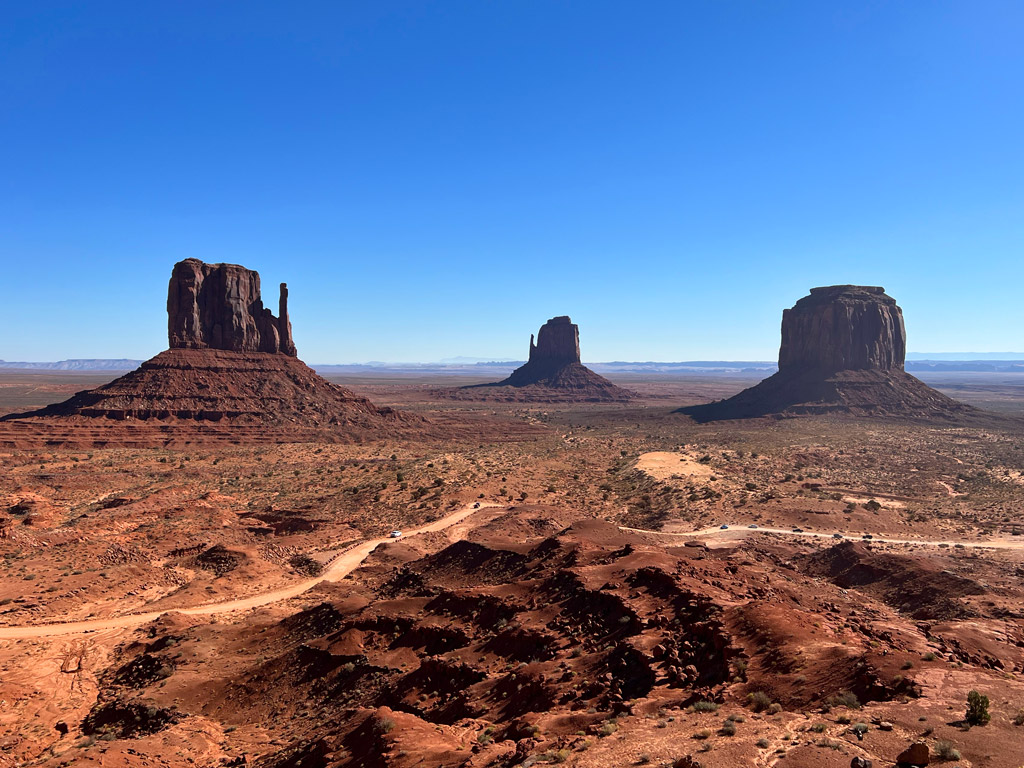
Day 7 – Monument Valley
Once again we got on the road early and drove a few hours south of Moab heading towards the Arizona border on route 163. You’ll pass the famous Mexican Hat rock formation on this road but your destination is the iconic Monument Valley which sits just over the border.
Since this park is managed by the Navajo Nation, it’s not covered by the America the Beautiful pass but it’s only $8 per person and well worth the admission fee. The incredible rock formations found here have been the backdrop for countless westerns and you’ll no doubt recognise a ton of spots around this famous landscape.
The points of interest are located along a 17 mile dirt track loop with various pullouts to stop and take a closer look. We were in an SUV that managed the terrain fine but smaller cars might have a harder time, particularly in bad weather. If you want an immersive experience, make sure to tune your stereo to the dedicated park radio station that plays traditional Navajo tribal music.
Once we were done in the park, we drove another couple hours heading west towards our overnight stop in Page, AZ. We stayed at the Country Inn & Suites by Radisson which was great value for money and included breakfast. There are a ton of options to choose from in the area and you can see a full list of them here.
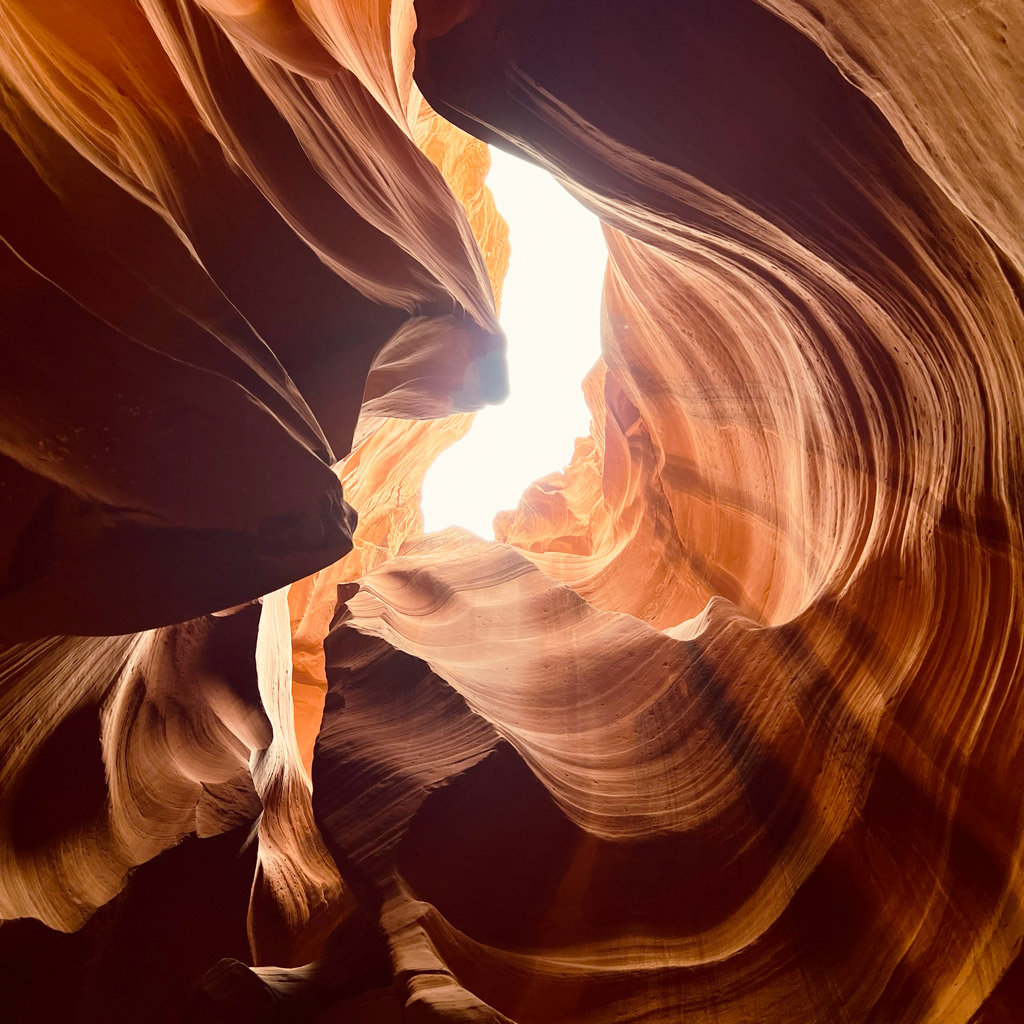
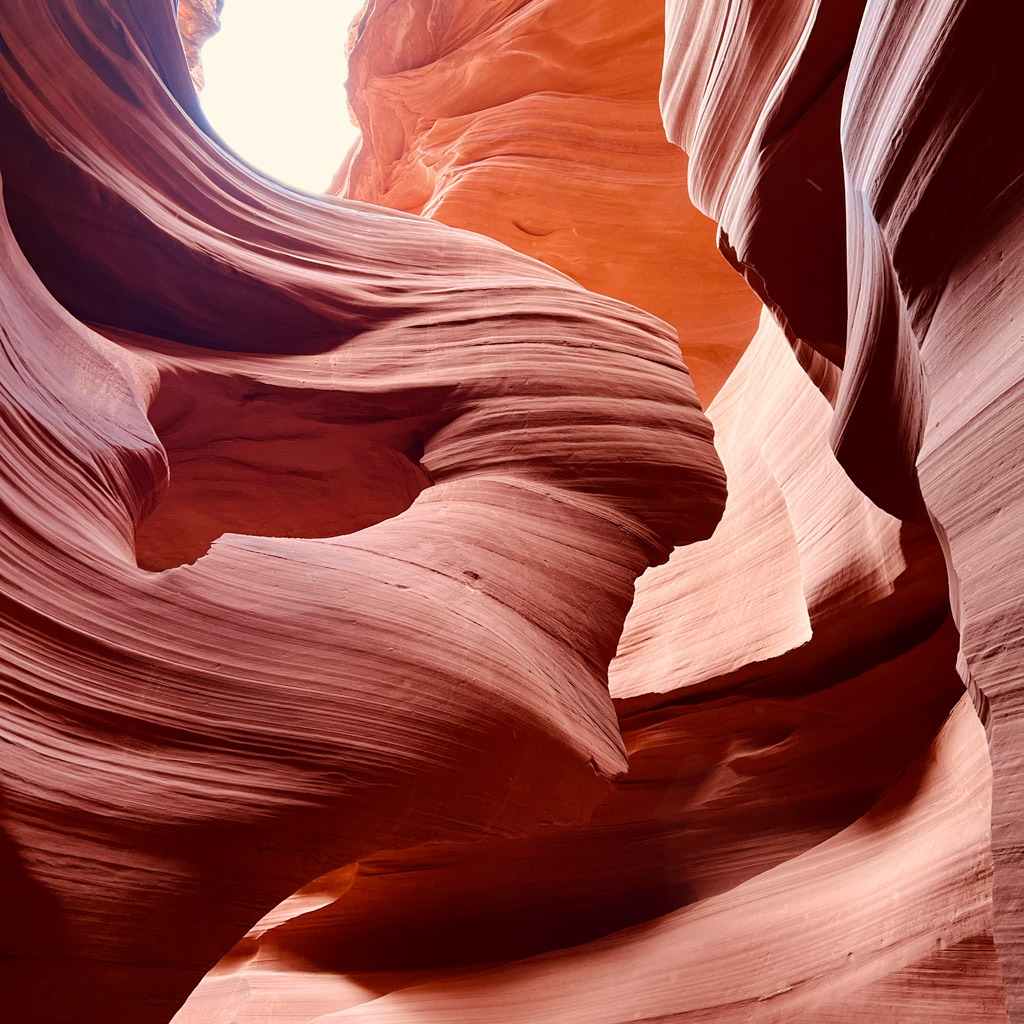
Day 8 – Antelope Canyon
If you’re not bored of looking at red rocks yet, then you should definitely spend the next day exploring Antelope Canyon. There are 2 sections to the canyon, upper and lower, and both offer a unique experience that’s worth visiting.
Both sections of the canyon require you to have a pre-booked tour and the most popular months and time slots can sell out well in advance so make sure you plan ahead. We booked onto an 11:15am tour for the lower canyon which is intended to give you the best lighting for your photos. Unfortunately, we managed to pick a rare cloudy day for this and didn’t get to see one of the iconic light beams that can pierce the canyon on sunny days.
Regardless of the lighting, the canyons were a great experience and we still managed to take some great snaps as seen above. It was an interesting opportunity to learn about the geography of the area as well the Navajo people.
If you’ve got time left to fill you can head to nearby Horseshoe bend but if not, you can get back on the road heading north west back into Utah towards Zion National Park. There are a few places to stay around the park with Springdale being the closest but also most expensive option. We ended up staying in Leeds which was about a 40 minute drive from the park.

Days 9 & 10 – Zion National Park
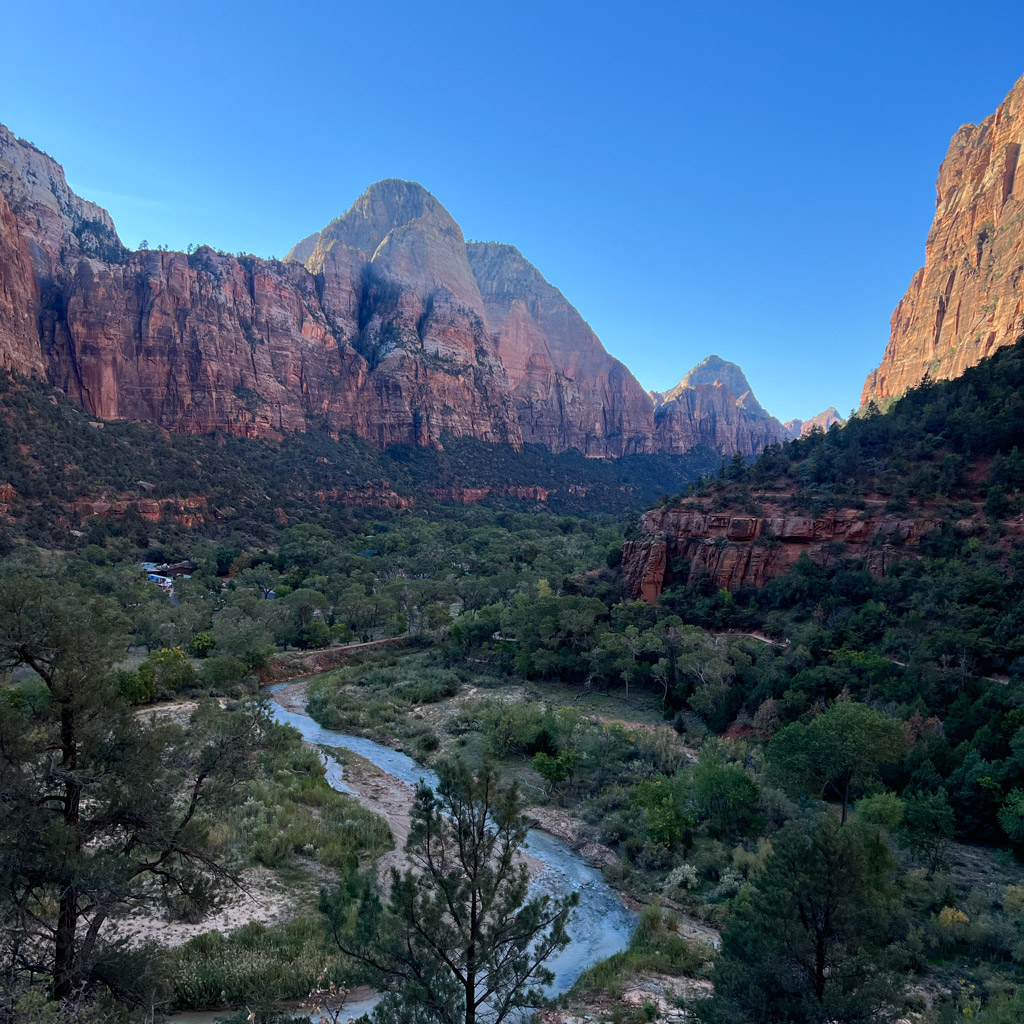
Another day, another early start as we got into Zion around sunrise to make sure we could get parked without any hassle. From there we jumped on the free shuttle that runs all day throughout the canyon and got off at the final stop, the Template of Sinawava. This is the start point of the famous narrows hike but we were here to complete the first section that doesn’t require you to get your feet wet. If we had researched a little more, we’d have found that you could hire river shoes, neoprene socks and walking poles to help you with the hike but with our current gear we weren’t able to complete the full adventure.
After this, we jumped back on the shuttle to head back down towards Zion lodge. From here, we started the Emerald Pools hike which took us past some of the most stunning scenery the park had to offer. This took us through to early afternoon and so we headed back down to the entrance for a quick lunch and look around the visitor centre. Our afternoon’s activity was a drive along the stunning Zion Park Boulevard and through the Mount Carmel tunnel which offers incredible views across other-worldly landscapes.
Disappointingly, some of the more spectacular hikes in Zion National Park were closed due to an earlier rockfall and this same rockfall also presented logistical nightmares in accessing various other parts of the park. Being a little too chicken to take on the soaring heights of Angel’s landing, we headed to a different part of the park for our second day, Kolob Canyons. We started with the 5 mile out and back Taylor Creek trail, keeping our eyes peeled for mountain lions after reading the warning signs. We managed to complete the hike unscathed and headed up to the viewpoint at the top of the canyon for some amazing vistas.
The last stop on our Zion tour was to head back over to the main park and hit the Watchman Trail for sunset. It’s only about a 3 mile round trip but does have a decent amount of elevation so come prepared. Keep your eyes peeled for wildlife along the trail as we managed to spot a tarantula as well as some mountain goats.
We left Zion feeling a little disappointed as we hadn’t had the chance to experience some of the best parts of the park. It’s definitely one we’ll return to one day and with the knowledge we have now, opt for some of the more demanding (and scary) trails.
Bonus Stop – Las Vegas
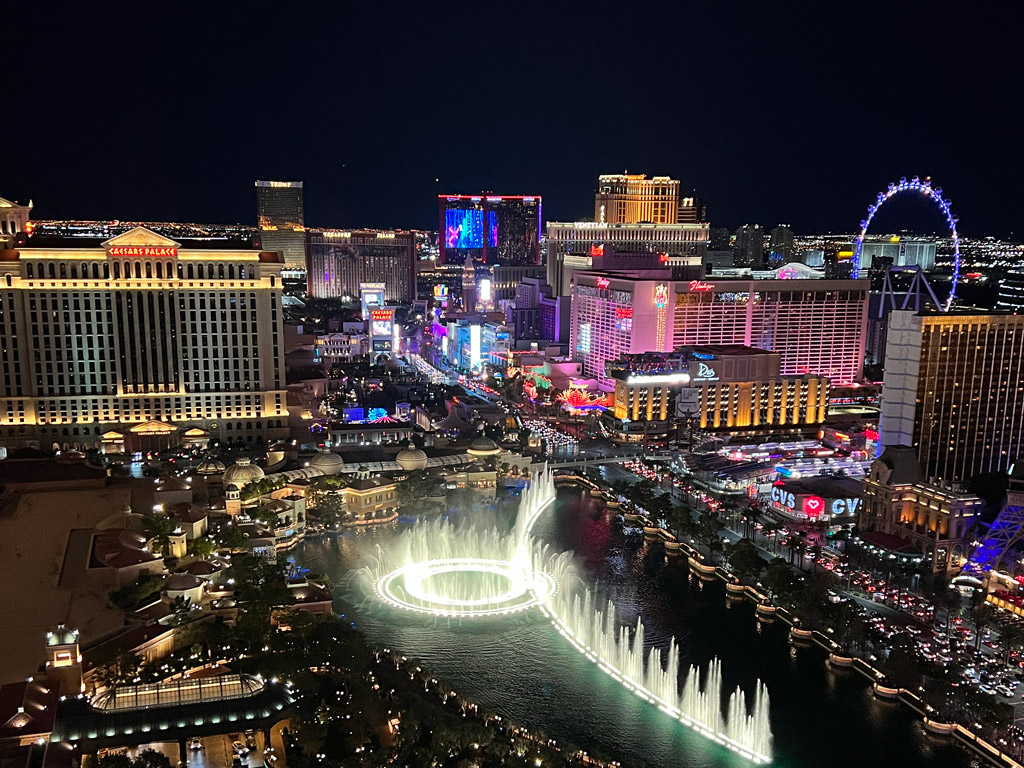
If you’ve made it this far into the itinerary, you’re only a couple of hours away from the glittering lights of Las Vegas. We had always planned to stop here as part of our trip and it dovetailed perfectly with the parks we wanted to visit.
If you’re ready to take a break from hiking for a few days, why not stop off in sin city for a couple of days to let your batteries recharge? This section of the trip included Camilla’s birthday so we stayed for here for 5 nights to celebrate before carrying on west towards California.
Day 11 – Death Valley National Park
If you’ve chosen not to stop in Las Vegas, then you’ll currently be on day 11 of the trip when we’d recommend checking out Death Valley national park. We had originally planned to cut through the park on another long day of driving on our way to California, stopping at some major sights along the route. Unfortunately, a couple of months before our trip, floods caused major damage route 190 and closed the west entrance to the park. This meant there was no way for us to exit the park on the California side and so reluctantly, we had to cancel this stop on our trip.
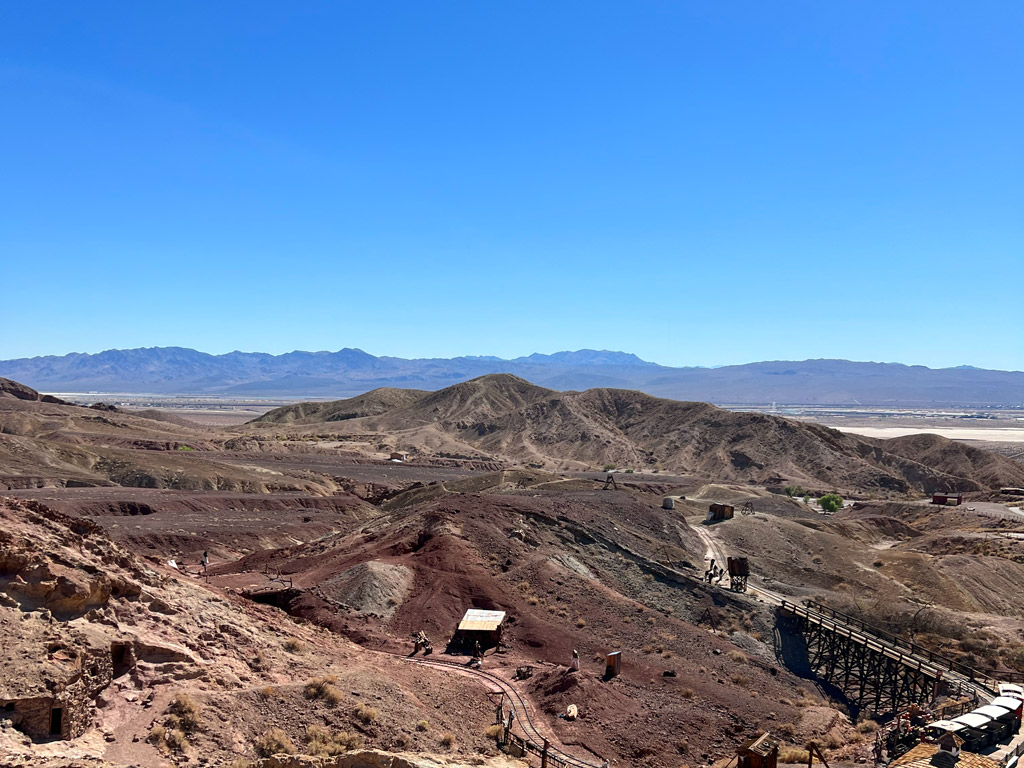
This is where our trusty friend, Roadtrippers stepped in and helped us with an alternate plan. Determined to make something of the day, we figured out an alternate route that took us past the Calico ghost town, an old mining town that was abandoned in the 1890s. This was an interesting insight into the old west, with much of the original architecture preserved as it was over 100 years ago. If you need help planning your next road trip, check out our recommendations for the best apps when planning your next trip or our top tips for planning a road trip.
After this, we hit the road once again heading west towards California and our next overnight stop in Three Rivers.

Day 12 – Sequoia National Park
After driving into the park around 8:30AM, we kicked off our day on the Congress Trail which takes you past the icon General Sherman, the largest tree in the world, as well as some other huge sequoias.
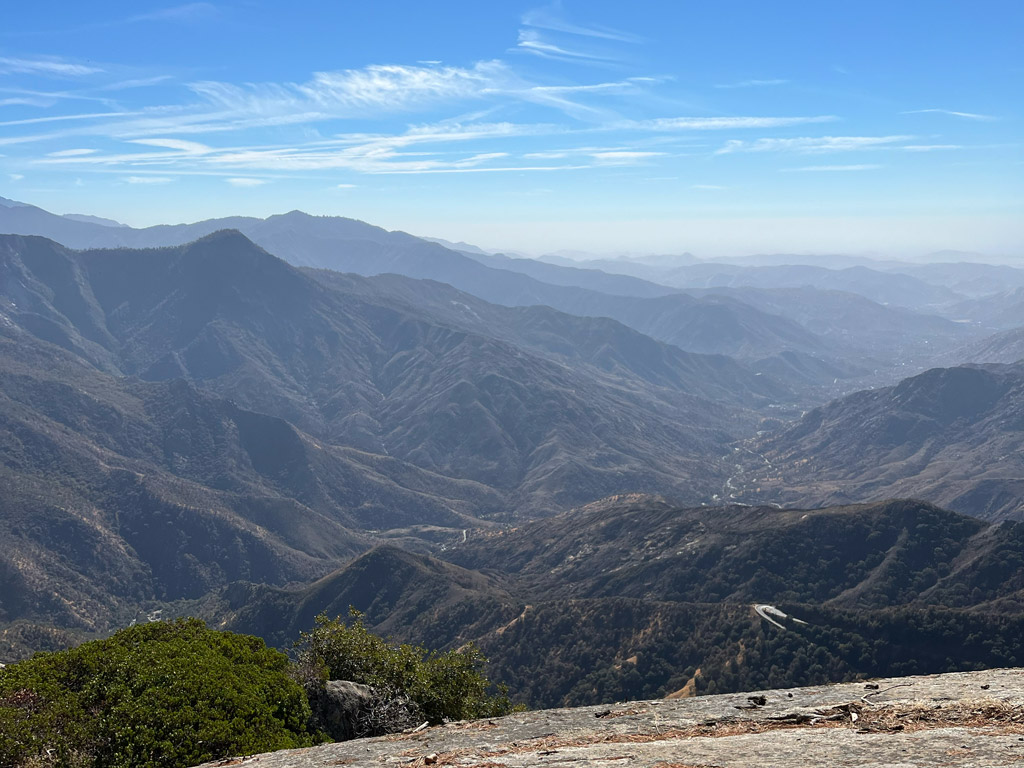
After this we hit the Crescent Meadow loop before heading over to Moro Rock. We made the short climb up the rock and were rewarded with astonishing views across the park. Just a short walk from here was Hanging Rock which offered equally impressive views as we stopped to catch our breath.
We were all hiked out by mid afternoon so headed back to our accommodation to get some rest before another day on the trails.
Day 13 – King’s Canyon National Park
Although we felt there was loads more to see in Sequoia, our tight schedule meant we had to keep moving so the next day we packed our stuff and headed up to nearby King’s Canyon National Park.
We needed to be on the road up to Yosemite by the afternoon so only had the morning here to hit one trail. We decided on the Big Baldy Ridge trail which was a roughly 6 mile out and back with a moderate climb to the top. Once again we were rewarded with stunning views across the canyon that rivalled those from Moro Rock the day before.
Soon enough, our time was up and we were back in the car again driving the 120 miles up towards the Yosemite Valley.

Days 14 & 15 – Yosemite National Park
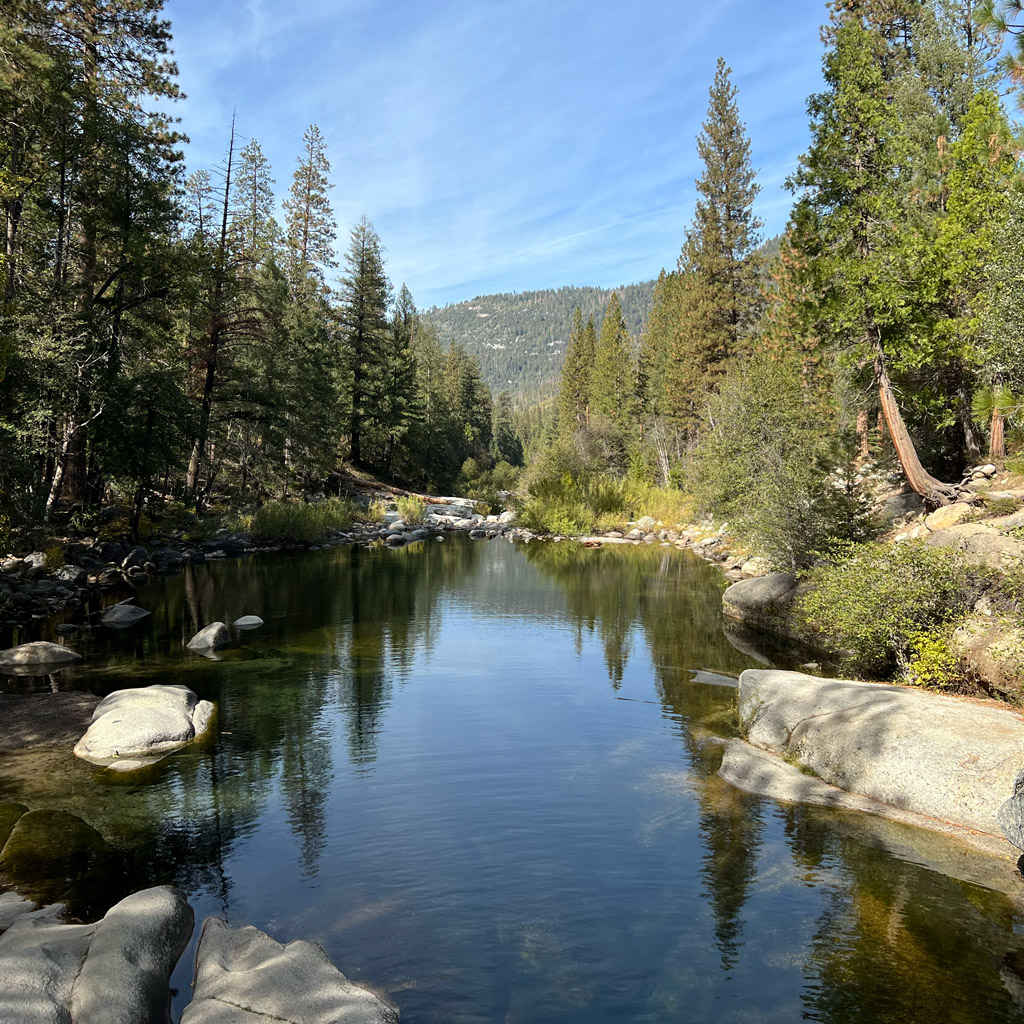
We couldn’t complete a road trip through California without visiting Yosemite National Park. This time around we managed to snag a lodge inside the park which made life much easier when planning our days. It was still about a 45 minute drive from where we stayed in Wawona up to the Yosemite valley but that certainly beats staying outside the park and driving for hours each way.
We kicked off our day with a stop off at the Tunnel View viewpoint for the iconic view across the valley. After a short wander around the valley floor we decided it was time to get up high. We researched a few trails and decided to try out the upper Yosemite Falls trail, a 7 mile out and back with almost 3,000 feet of elevation gain. We thought that our days spent hiking in the rockies would have prepared us for this but we were far from it. This hike was absolutely BRUTAL and nearly had us tapping out at multiple points during the climb. It took us nearly 3 hours (with multiple stops) but we eventually made it to top of the falls which offers an amazing viewpoint across the rest of the valley.
The way back down was still pretty strenuous due to the slippery rock surface which requires a lot of concentration in order to avoid a nasty fall. After completing the hike, we realised we were pretty under prepared for it and if we had known before, we would have started earlier to beat the heat and taken more water with us.
After our hard work the previous day, we decided to spend the next day a little closer to home and hit some of the trails closer to Wawona. We completed a small section of the Chilnualna Falls trail before heading over to the Swinging Bridge trail and both offered some truly gorgeous scenery. We were hoping to get some wild swimming done on our last trail but, being early November, the water was icy cold and not particularly inviting.
Yosemite is another place we’d love to head back to one day. Visiting in November meant that most of the huge waterfalls that Yosemite is known for had reduced to small trickles so we felt that we didn’t get the true Yosemite experience. If we were return we’d come back in the spring time to see the famous waterfalls in all their glory.
Day 16 – Lake Tahoe
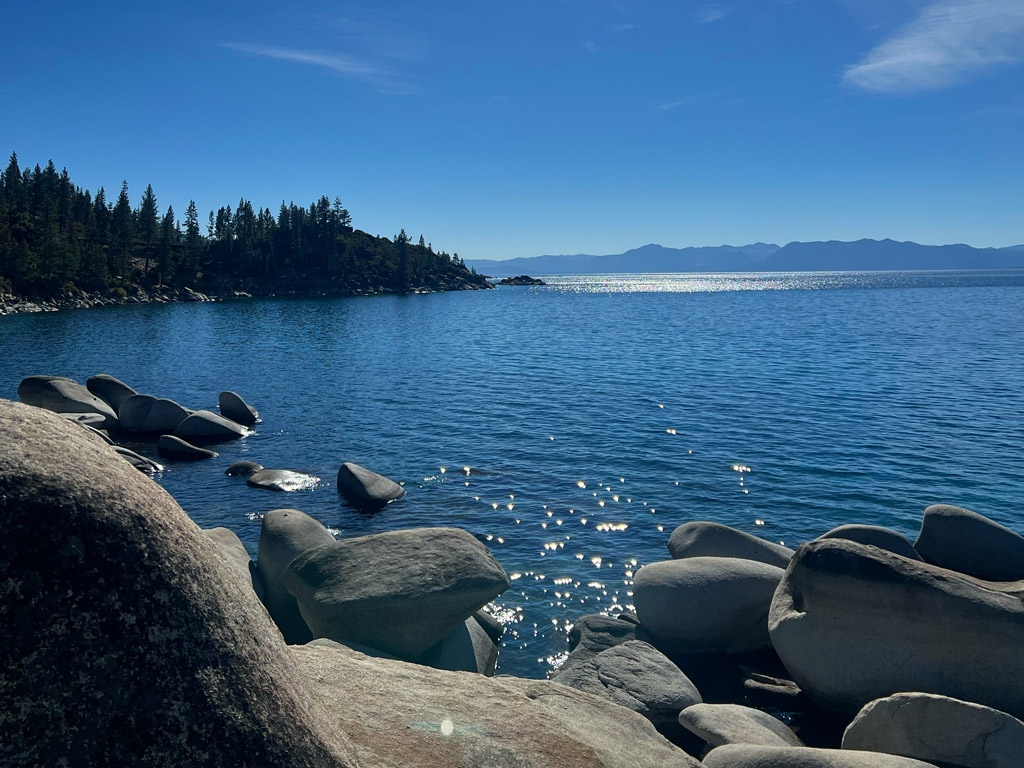
Although not technically a national park, Lake Tahoe offers scenery to rival anywhere else included in this itinerary. As we were nearby in Yosemite, we decided to include a stop here to round off an amazing couple of weeks. The drive from Yosemite Valley to Lake Tahoe takes about 4 hours but is absolutely stunning and takes you past pristine alpine lakes and luscious forests.
We stayed at the lovely Station House Inn in South Lake Tahoe which is a revamped motel with some nice design touches. There’s even a fire pit outside if you fancy making some s’mores. Being such a popular tourist destination, there’s a huge choice of places to stay and you can see a full breakdown of them here.
Even though it only takes about 2 hours to drive around the whole lake, we spent a whole day to take it all in as we stopped off for some incredible views from Inspiration point in Emerald Bay as well hiking the Eagle Lake trail that starts just across the road.
The town of South Lake Tahoe sits right on the California / Nevada border so we capped off our day in Lake Tahoe but hitting some of the casinos just across the state line.

Wrapping Up
Mathematicians among you will realise that the itinerary detailed here is a little longer than two weeks and if you include our stop in Vegas, it actually took us 3 weeks to complete.
However, there are certain parts that could be skipped or shortened to make sure you can complete this 2 week national parks road trip in your desired timeframe. For example you could realistically see all of Arches in 1 day and could also skip King’s Canyon in favour of just seeing Sequoia.
Making This Road Trip Work for You
- Short on time? Focus on the “Big 3”: Rocky Mountain, Arches, and Yosemite
- Starting from California? This national parks road trip map works perfectly in reverse
- Flexible dates? Spring offers the best waterfalls, fall provides ideal hiking weather
It’s obviously preferable to take your time to fully experience things but if you’re on a tight schedule like we were, this **two week national park road trip** packs in a ton of the amazing scenery this country has to offer without taking up too much of your time.
2 Week National Parks Road Trip: Frequently Asked Questions
Can you do this road trip in reverse?
Absolutely! This route works perfectly from California to Colorado.
How much does a 2 week national parks road trip cost?
Budget $250/day for two people including accommodation, fuel and park fees. Costs can vary significantly based on your accommodation and food choices – you can bring this down considerably by camping instead of staying in hotels and self-catering rather than eating out for every meal.
What’s the best time for this national parks road trip?
Late spring (May) or early autumn (September-October) offer the best weather and fewer crowds.
How long does it take to drive between parks?
Most driving days run 2-3 hours, but the longest drive (Estes Park to Moab at nearly 400 miles) will take around 6/7 hours non stop. The route is designed to minimise driving time and maximise park exploration.
Leave a Comment
Your email address will not be published.